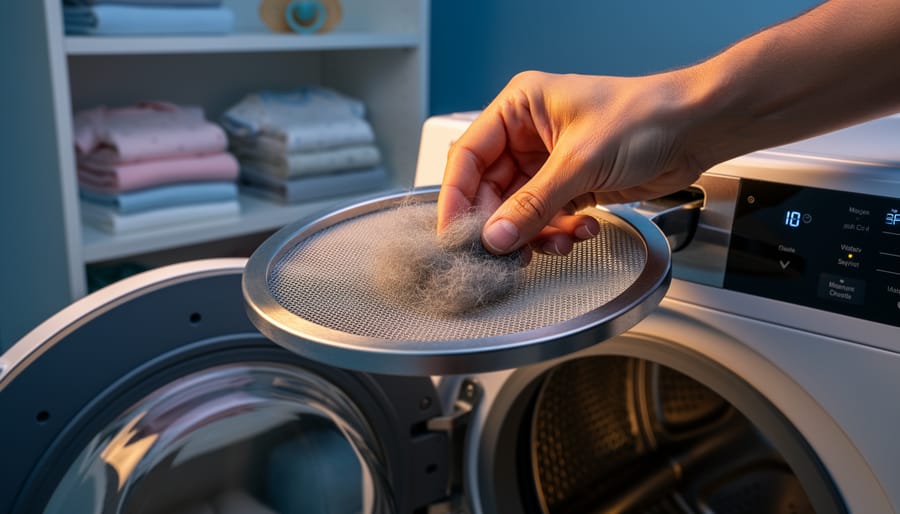
Clean your dryer’s lint trap before every single load—yes, even when you’re running those three back-to-back onesie cycles at 2 AM. This simple 10-second habit removes the highly flammable material that causes nearly 17,000 home dryer fires annually, and it’s especially critical now that you’re washing exponentially more laundry than ever before.
Inspect the lint trap itself monthly for residue buildup from baby detergents and fabric softeners, which create an invisible film that blocks airflow. Hold it under running water—if water pools instead of draining through immediately, wash the screen with warm soapy water and a soft brush.
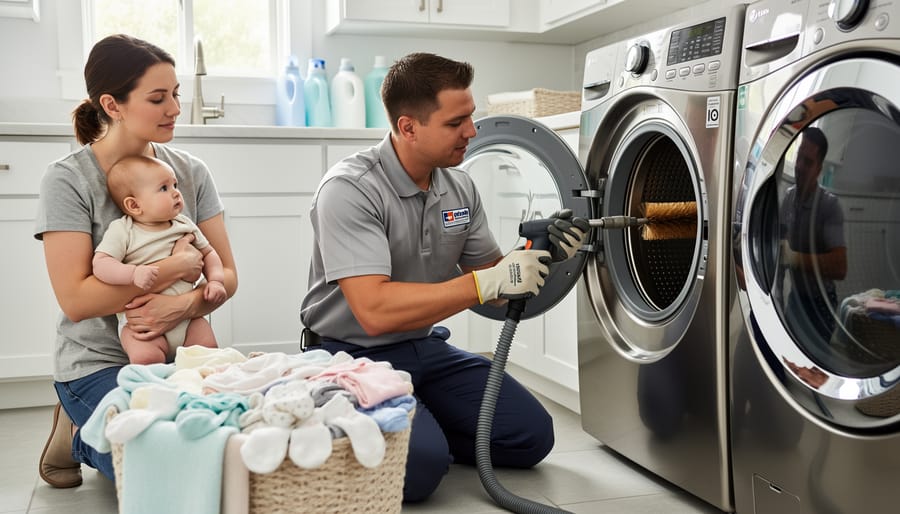
Schedule a professional dryer vent cleaning every six months instead of the standard yearly recommendation for households without babies. Your dramatically increased laundry volume means faster lint accumulation in the vent system, and clogged vents are responsible for 34% of dryer fires. While your baby sleeps, check that your outdoor vent flap opens freely when the dryer runs—this quick visual confirms proper airflow.
Never overload the dryer with those tempting mountains of burp cloths and sleepers. Overstuffed drums prevent proper air circulation and cause the machine to overheat, while also making items take longer to dry and wasting your precious time. Dryer Vent Clean Experts recommend filling drums only two-thirds full for optimal safety and efficiency.
Why New Parents Need to Worry About Dryer Fires
When I brought my daughter home, I honestly didn’t think much about our dryer beyond wondering if it could keep up with the endless laundry. Within the first month, I was running it at least twice a day, sometimes three times. What I didn’t realize was that all those adorable onesies, receiving blankets, and burp cloths were creating a hidden safety issue in my laundry room.
Here’s what happens during new parenthood: your laundry loads can triple or even quadruple overnight. The average family does about 8-10 loads per week, but new parents often find themselves doing 15-20 loads. Baby clothes, while tiny and adorable, are lint magnets. Those soft cotton fabrics shed more fibers than adult clothing, and when you’re washing items after every spit-up and diaper blowout, that lint accumulates fast.
According to the U.S. Fire Administration, dryers and washing machines cause an average of 15,970 fires annually, with failure to clean being the leading factor. While that might sound concerning, the empowering news is that most of these fires are completely preventable with simple maintenance habits.
Cloth diapers deserve special mention here. If you’re using them, you’re already amazing for making that commitment, but know that they produce significantly more lint than other fabrics. The same goes for those fluffy towels you’re using for bath time and the soft blankets you’re constantly washing.
The good news? Once you understand this connection between your increased laundry routine and dryer safety, you can take simple steps to protect your family without adding stress to your already full plate.
The Lint Trap Isn’t Enough: What They Don’t Tell You
I remember feeling so proud of myself during those early weeks with my daughter—I was religious about cleaning the lint trap after every single load. Then my neighbor, a retired firefighter, gently told me something that made my stomach drop: the lint trap catches only about 60% of the lint your dryer produces.
Here’s what I wish someone had told me sooner. While cleaning that trap is absolutely important, lint still sneaks past it and builds up inside your dryer vent and exhaust duct over time. This hidden accumulation is what actually causes most dryer fires, and you can’t see it happening.
Now, here’s where it gets real for us as parents: baby laundry creates significantly more lint than adult clothing. Those adorable fleece sleepers? Lint magnets. The soft receiving blankets and burp cloths you’re washing three times a day? Same story. Baby towels after bath time? You guessed it. These fluffy, cozy fabrics shed tiny fibers with every tumble, and much of that lint is making its way into places you can’t easily reach.
When I learned this, I realized why my dryer seemed to be working harder than usual despite my diligent lint trap cleaning. All those extra loads of baby items weren’t just keeping me busy—they were creating a hidden fire risk I didn’t know existed. The good news? Once you understand where the real problem lies, you can take simple steps to address it.
Simple Daily and Weekly Prevention Habits
After Every Load
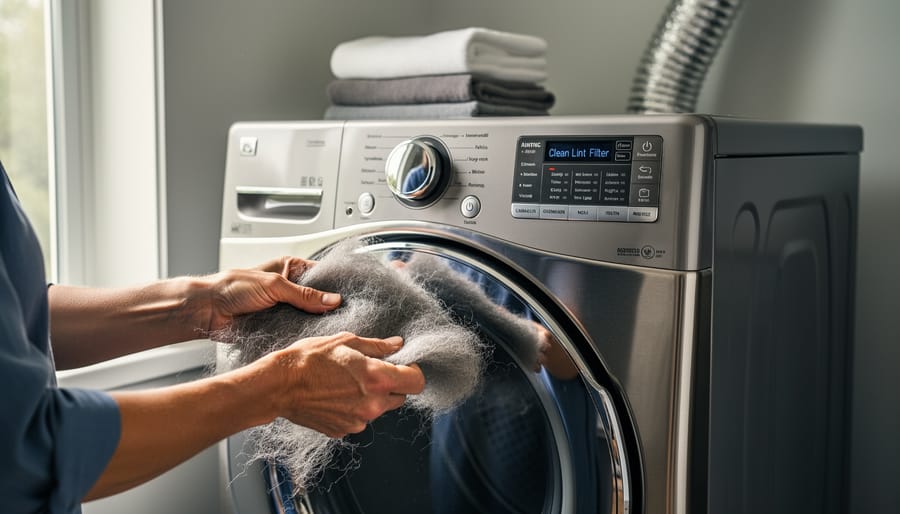
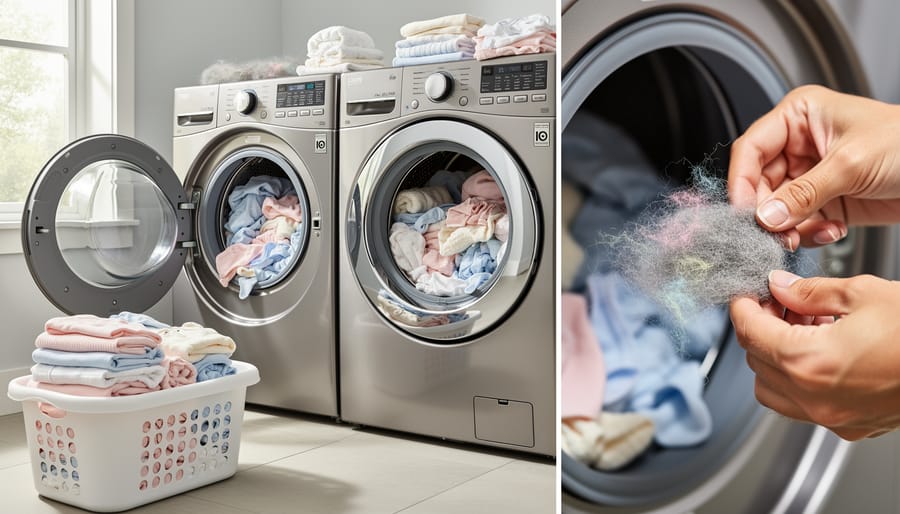
I know it feels like one more thing to add to your endless to-do list, but this quick habit can truly save your family. After every single load, take just thirty seconds to clean your lint trap. Run your fingers along the screen to gather every bit of that fluffy debris, and here’s a tip many people miss: rinse your lint trap with warm water once a month to remove invisible residue from dryer sheets and fabric softeners.
While you’re at it, peek at the rubber door seal. Lint loves to hide there, especially when you’re washing those adorable little onesies and receiving blankets. A quick wipe-down prevents buildup that can block airflow.
I remember feeling overwhelmed by adding another task to my routine, but just like other daily habits that protect our children, this becomes second nature quickly. Some moms keep a small trash bin right next to their dryer as a visual reminder.
Think of this as your post-load cool-down ritual. While the dryer door is open, make sure nothing is blocking the exhaust vent area. Proper air circulation isn’t just about efficiency; it’s about keeping your home safe for your precious baby who depends on you for everything.
Weekly Quick Checks
Between diaper changes and feeding schedules, I know adding another task to your weekly routine might feel overwhelming. But these quick checks take just five minutes and can truly protect your family.
First, take a peek outside at your dryer’s exterior vent opening. You should see it open when the dryer runs and close when it’s off. If lint is visible around the opening or the flap seems stuck, that’s your dryer asking for help. One mom in my community noticed her vent flap barely moving and discovered a bird’s nest blocking the vent—a fire hazard she caught just in time.
Next, resist the temptation to stuff every baby outfit into one massive load. I get it, when you’re dealing with multiple blowouts in a day, efficiency feels crucial. But overloading prevents proper airflow and makes your dryer work dangerously hard. Leave enough room for clothes to tumble freely.
Finally, pay attention to drying times. If those tiny onesies that used to dry in 40 minutes now need an hour, your dryer is struggling. This isn’t just inconvenient—it’s often the first warning sign of lint buildup or ventilation problems. Trust your instincts when something feels off; you’re protecting your little one.
Monthly Deep-Clean Tasks
I know you’re already doing so much with those endless loads of onesies and burp cloths, but once a month, let’s give your dryer some extra attention—think of it as a mini spa day for your hardworking appliance.
Start by pulling your dryer away from the wall. I remember feeling intimidated by this at first, but trust me, it’s easier than it sounds. Use your vacuum’s hose attachment to clean behind and underneath where dust bunnies and lint love to hide. This buildup can restrict airflow and create a fire hazard, especially with all that extra laundry you’re doing now.
While you’re back there, check that the vent hose is securely connected at both ends. Give it a gentle tug—it shouldn’t come loose. Look for any kinks or damage that might trap lint or restrict air movement. If the hose feels brittle or shows cracks, it’s time for a replacement.
Don’t forget the drum interior. Wipe it down with a damp cloth to remove any residue from baby detergents, fabric softeners, or those inevitable diaper cream smudges. This keeps everything running smoothly and prevents buildup that could ignite.
These monthly checks might seem like one more thing on your plate, but they take just fifteen minutes and provide incredible peace of mind.
Special Considerations for Baby Laundry
Your baby’s adorable outfits and essentials deserve special attention when it comes to dryer safety. I learned this the hard way when my pediatrician mentioned that certain baby laundry habits could actually increase fire risk—something I’d never considered during those sleep-deprived early weeks.
Here’s something that surprised me: fabric softeners and dryer sheets, while they make clothes smell amazing, create a waxy buildup on both your baby’s clothes and inside your dryer’s lint trap. This residue is surprisingly flammable and reduces your dryer’s efficiency. Instead, try adding a quarter cup of white vinegar to the rinse cycle for softer clothes without the fire risk. Your dryer (and your baby’s sensitive skin) will thank you.
If you’re using cloth diapers—kudos to you!—they require extra care. These absorbent items hold moisture longer and need adequate drying time, but overloading your dryer with wet diapers forces the machine to work harder and longer, generating excess heat. Run smaller loads and ensure they’re completely dry before removing them.
Waterproof items like mattress pads, bibs with plastic backing, and sleep sack liners need special attention too. These can trap heat during the drying cycle and may contain materials that shouldn’t be exposed to high temperatures. Always check care labels and use low heat settings for anything with a waterproof layer.
Finally, those precious tiny clothes don’t need marathon drying sessions. Over-drying delicate baby garments not only damages the fabric but also wastes energy and creates unnecessary heat buildup in your dryer. Remove items while they’re just barely dry—they’ll finish air-drying quickly, and you’ll reduce wear on both the clothes and your machine.
When to Call a Professional (And How Often)
I learned this lesson the hard way when my dryer started taking forever to dry even a single load of baby onesies. Turns out, I needed professional help—and I wish I’d known the signs earlier.
Here’s what you need to know: even with your best cleaning efforts, professional dryer vent cleaning should happen at least once a year. With the mountains of laundry you’re doing as a new parent, you might even consider twice yearly. I know, one more thing to schedule, right? Try booking it during your little one’s regular nap time, or have your partner handle being home for the appointment while you take a well-deserved coffee break.
But some situations can’t wait for your annual appointment. Call a professional immediately if you notice longer drying times—especially if loads that used to take one cycle now need two or three. This was my first warning sign. A burning smell is another red flag that needs urgent attention. Don’t dismiss it as “just dust burning off.”
Other warning signs include your dryer feeling excessively hot to the touch, visible lint accumulating around the outside vent opening, or the laundry room becoming noticeably warmer and more humid than usual.
I get it—calling a professional feels like another expense when you’re adjusting to new baby costs. But think of it as essential maintenance, like your car’s oil change. One service call is infinitely cheaper and safer than dealing with a dryer fire. Your family’s safety is worth every penny.
Creating a Baby-Safe Laundry Room Setup
Setting up your laundry room with safety in mind doesn’t have to be complicated, mama. Think of it as creating a protective bubble around one of the hardest-working appliances in your home right now.
Start with proper installation and ventilation. Your dryer needs room to breathe, just like the rest of us. Make sure it’s installed at least a few inches from the wall, allowing air to circulate freely. When it comes to venting, always choose rigid or flexible metal ducts over plastic or foil ones. Metal venting is fire-resistant and won’t trap lint the way plastic can. I learned this from a fire safety expert who shared that plastic venting is actually one of the top contributors to dryer fires, something I wish I’d known earlier in my parenting journey.
Keep the area around your dryer completely clear. I know it’s tempting to stack diaper boxes or laundry supplies on top, especially when space is tight, but this creates a serious fire hazard. Heat needs somewhere to escape, and blocking airflow is like covering a pot on the stove.
Ensure your dryer sits on a stable, level surface. A wobbly dryer can cause mechanical issues and even disconnect venting over time.
One final note: as your little one becomes mobile, store all laundry detergents, fabric softeners, and dryer sheets in locked cabinets or high shelves. Those colorful pods can look surprisingly appealing to curious toddlers. Safety first means thinking ahead to every stage of their development.
You’re already doing an amazing job protecting your little one by taking the time to learn about dryer safety. The truth is, these simple habits—cleaning the lint trap, checking your vent, and being mindful about what goes in the dryer—aren’t adding massive tasks to your already full plate. They’re small, protective steps that become second nature quickly.
Consider adding “check dryer lint” to your weekly routine, right alongside other baby-care essentials. Maybe it becomes something you do during Sunday laundry prep or while you’re folding those endless tiny onesies. As one fire safety expert I spoke with shared, most dryer fires are entirely preventable with consistent maintenance—and consistency is something parents excel at, even when exhausted.
Managing the overwhelm of new parenthood means prioritizing what truly matters, and keeping your family safe absolutely qualifies. You don’t need to be perfect; you just need to be aware. Trust yourself to build these habits into your rhythm. Your baby is lucky to have someone who cares enough to take these precautions seriously.