Perimenopause vs. Menopause: Key Differences and What They Mean for Your Journey

Woman in her 40s by a window holding a warm mug and adjusting her cardigan, representing comfort and symptom support during perimenopause.

Here’s the truth: perimenopause is the transition phase leading up to menopause, while menopause itself is a single point in time marked by 12 consecutive months without a period. If you’re in your 40s and noticing irregular cycles, unpredictable periods, or new symptoms like hot flashes, you’re likely in perimenopause, not menopause. This distinction matters because understanding where you are in this journey helps you know what to expect and when.
Key Takeaway: Perimenopause is the transition period (which can last several years) leading to menopause, while menopause is …

New moms in a cozy community room form a supportive circle while one holds a baby and others share tea and conversation.
Mom Life Parenting Perinatal Wellness and Safety

Support Groups for New Moms: Finding the Right Community for Your Journey

Joining a support group for new moms gives you access to shared experiences, practical advice, and emotional validation during one of the most isolating yet crowded phases of your life. These groups, whether in-person meetups at local community centers or virtual circles on platforms like Facebook and specialized apps, create space for the questions you’re afraid to ask your pediatrician and the feelings you’re worried are “wrong.” You’ll find them through hospitals, lactation consultants, parenting organizations, faith communities, and targeted online searches, and they range from casual coffee gatherings to …

Parent’s hands treating a gum-stained kids’ T-shirt with an ice cube and a small plastic scraper near the laundry area.
Mom Life Parenting

How to Remove Gum and Sticky Messes from Kids’ Clothes (Plus What Works Fast)

You can remove gum and sticky messes from kids’ clothes in about 15 minutes using ice, freezer time, or household oils paired with a gentle scraping tool and a quick wash. The key is hardening gum with cold (making it brittle and easy to lift) or breaking it down with fat-based solvents like peanut butter or cooking oil before laundering. Most parents succeed on the first try when they skip the instinct to scrub immediately and instead treat the gum with temperature or oil first.
I know that moment of discovery all too well. You’re folding laundry or helping your toddler undress, and there it is: a flattened wad of gum …

Woman in her late 40s standing in a bedroom holding a sheet, suggesting discomfort from night sweats associated with perimenopause.
Parenting Perinatal Wellness and Safety Pregnancy

Pre Menopause Symptoms: The Signs Your Body Is Transitioning

Pre-menopause (perimenopause) is the transitional stage before your final period, typically beginning in your mid-40s and lasting four to eight years, marked by symptoms like hot flashes, night sweats, irregular periods, mood shifts, and sleep disruptions as your hormone levels fluctuate. If you’ve been waking up drenched in sweat, skipping periods, or feeling unexpectedly irritable, you’re not imagining things. More than 75% of people experience hot flashes and night sweats during this phase, making them the most common symptoms of this transition.
You might be juggling teenagers, aging parents, and a career while your …

Woman in her early 40s holding a warm mug at home, looking thoughtful with subtle cues of self-care and perimenopause transition.
Mom Life Parenting Perinatal Wellness and Safety

Peri Menopause Age: What to Expect and When It Happens

Perimenopause age typically begins for women in their 40s, though the menopause transition can affect women aged 40 to 60, with some experiencing the first signs in their late 30s or not until their early 50s. This phase marks the years leading up to menopause when your ovaries gradually produce less estrogen, triggering a cascade of physical and emotional changes that can catch you completely off guard, especially if you’re still in the thick of raising children and juggling the demands of active motherhood.
If you’re wondering whether the irregular periods, night sweats, or unexpected mood shifts you’re …

Doctor consulting with a patient in a modern exam room, using a notepad while preparing for diagnostic discussion for endometriosis.
Parenting Perinatal Wellness and Safety

How Does a Doctor Diagnose Endometriosis? (and What Tests to Expect)

Diagnosing endometriosis involves a combination of patient interviews, physical examination, imaging tests like transvaginal ultrasound or MRI, and in some cases, a surgical procedure called laparoscopy to confirm the presence of endometrial tissue growing outside the uterus. If you’ve been experiencing painful periods, pelvic pain between cycles, or pain during intercourse, you might be wondering what steps your doctor will take to figure out what’s happening in your body.
The journey to an endometriosis diagnosis can feel overwhelming. I’ve spoken with women who waited years before getting answers, often feeling …

A mother sits beside open moving boxes while a helper carries blankets in a softly lit home, with covered furniture and a small medical kit visible, representing a careful family move during a long illness.
Parenting Perinatal Wellness and Safety Pregnancy

How to Move Your Family Out During a Long Illness: A Step-by-Step Plan

Moving your family during a long illness requires planning the relocation in stages, delegating tasks to trusted helpers, and protecting the ill family member from physical strain and emotional overwhelm. The process typically takes two to four weeks longer than a standard move, depending on the severity of the illness and whether you’re downsizing, but breaking it into manageable phases makes it possible even during the most challenging circumstances.
If you’re reading this, you’re likely carrying an enormous weight. Perhaps you’ve received a difficult diagnosis, or someone you love is facing a long recovery…

Pregnant woman sleeping on her left side with a pillow between her knees on a comfortable bed in a softly lit bedroom.
Parenting Perinatal Wellness and Safety Pregnancy

How to Solve Pregnancy Sleeping Issues: Practical Solutions for Every Trimester

Sleep during pregnancy gets better when you address the right causes at the right time. Most sleep disruption stems from physical discomfort, hormonal shifts, and anxiety, all of which respond to specific, trimester-appropriate strategies you can start using tonight.
The challenge isn’t just falling asleep. It’s staying asleep through the night while managing a growing belly, frequent bathroom trips, leg cramps, and a mind racing with questions about the baby. What worked in your first trimester won’t necessarily help in your third, and generic advice like “just relax” misses the point entirely.
…

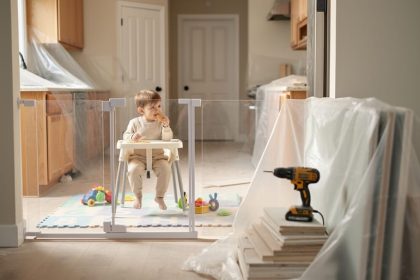
Young child eating at a temporary feeding station behind a physical barrier in a kitchen under renovation, with covered tools and plastic sheeting in the background.
Mom Life Parenting Perinatal Wellness and Safety

How to Survive a Kitchen Renovation with Young Kids at Home (Without Losing Your Mind)

You can survive a kitchen renovation with young kids at home by setting up a temporary feeding station, childproofing the construction zone with physical barriers, and establishing a clear daily routine that separates renovation hours from family time. Most families complete kitchen renovations in 4-8 weeks, and with the right preparation, you’ll protect your children’s safety while maintaining enough normalcy to get through each day without losing your sanity.
I won’t sugarcoat it: renovating your kitchen while caring for young children ranks among the most stressful home projects you’ll tackle as a mother. …

Parent gently tucking in a toddler in a cozy bedroom, with a robe and stuffed comfort item on the bed during bedtime.
Mom Life Parenting Perinatal Wellness and Safety

How to Build a Bedtime Routine Toddlers Actually Stick To (Without the Battles)

You can build a toddler bedtime routine that actually works by combining predictable structure with choices that let your child feel in control. The secret isn’t a longer routine or more elaborate rituals. It’s understanding that toddlers resist bedtime because they’re developmentally wired to assert independence, not because they’re being difficult. When you design a routine that channels this need for autonomy instead of fighting it, cooperation follows.
I learned this the hard way after months of nightly meltdowns with my daughter. Every expert sleep schedule I tried crumbled within days. The turning point…