
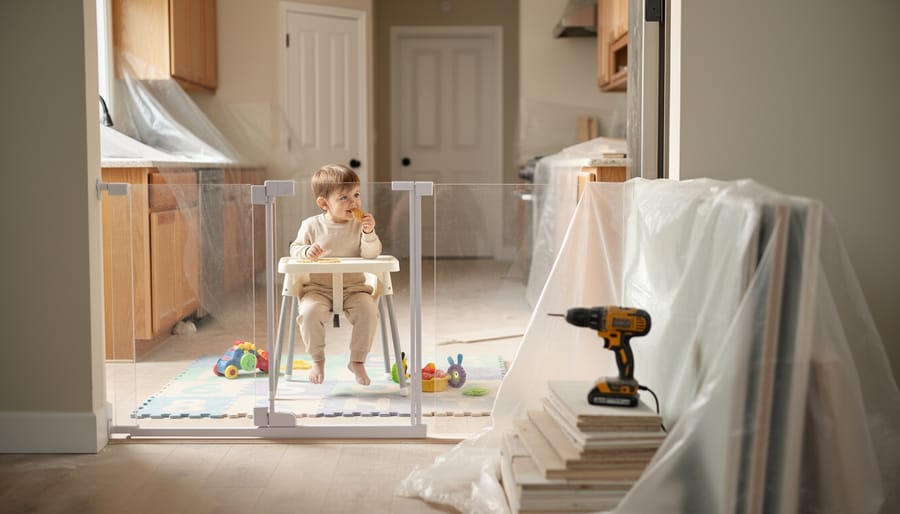
You can survive a kitchen renovation with young kids at home by setting up a temporary feeding station, childproofing the construction zone with physical barriers, and establishing a clear daily routine that separates renovation hours from family time. Most families complete kitchen renovations in 4-8 weeks, and with the right preparation, you’ll protect your children’s safety while maintaining enough normalcy to get through each day without losing your sanity.
I won’t sugarcoat it: renovating your kitchen while caring for young children ranks among the most stressful home projects you’ll tackle as a mother. You’re about to lose the heart of your home, the place where you prepare meals, gather as a family, and maybe sneak those quiet morning moments before everyone wakes up. Add in toddlers who are drawn to power tools like magnets, preschoolers who ask “why” about every construction decision, and the constant worry about dust, noise, and whether you can actually feed your family without a working stove, and you’ve got a recipe for overwhelm.
But here’s what I’ve learned from talking to dozens of mothers who’ve been through this, and from my own kitchen renovation two years ago with a three-year-old and a baby: it’s absolutely manageable when you have a concrete plan. The key isn’t perfection. It’s knowing exactly which safety measures are non-negotiable, how to feed your family with minimal stress, and which corners you can cut without guilt.
You don’t need to become a construction expert or a camping chef. You just need a framework that addresses the real challenges: keeping curious hands away from dangerous zones, maintaining some version of your regular routines, and having backup plans for the inevitable moments when things don’t go as scheduled. Professional contractors like PD Home Renovations emphasize that families with young children benefit most from a phased approach with clearly defined work hours and dedicated safe spaces.
What You’ll Need to Get Through Renovation Day-to-Day
You’ll manage this renovation much more smoothly if you gather your supplies before the first hammer swings. Think of it as setting up camp inside your own home, you’re creating a functional base that keeps your family fed, safe, and reasonably sane while your real kitchen is out of commission.
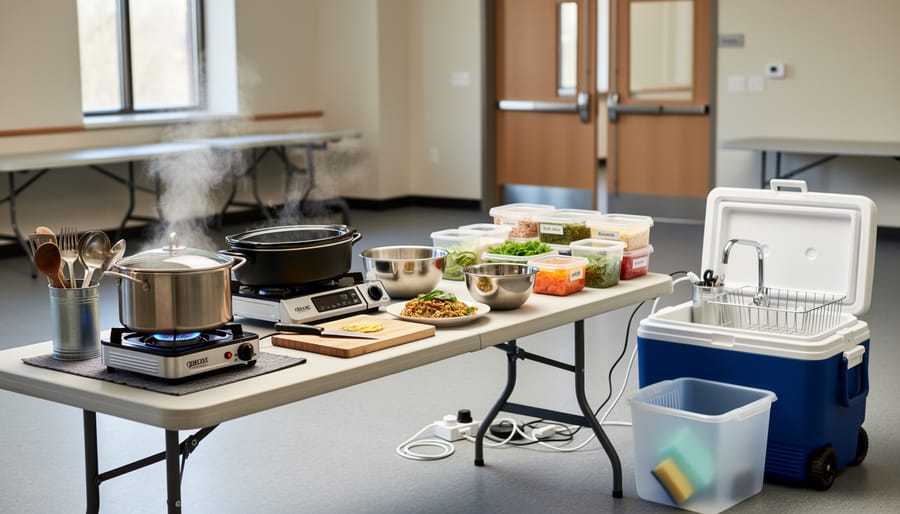
Start by designating a temporary kitchen space. A corner of your dining room, a section of the basement, or even a cleared-out garage can work. You’ll need a sturdy folding table as your main work surface, plus a smaller card table if space allows for a dedicated kid snack station. Grab a few heavy-duty extension cords and a power strip, because you’ll be running multiple appliances from areas not designed for cooking.
For actual food preparation, prioritize appliances that do the heavy lifting without requiring much cleanup. A microwave handles reheating and quick meals. An electric kettle boils water for oatmeal, pasta, and hot drinks in under two minutes. A slow cooker lets you dump ingredients in the morning and return to a ready meal. If you have the budget, add a portable induction burner or hot plate for more versatility, and a toaster oven covers everything from frozen waffles to simple baked chicken. A small countertop dishwasher can be a game-changer if you have space and a nearby water connection.
- Temporary kitchen: folding tables, extension cords, power strip, portable appliances (microwave, slow cooker, electric kettle, hot plate, toaster oven), cooler or mini-fridge
- Feeding supplies: disposable plates, bowls, cups, and utensils; paper towels; plastic storage bags; aluminum foil; plastic wrap; reusable water bottles
- Safety equipment: baby gates, door locks, plastic sheeting, painter’s tape, childproof outlet covers, first aid kit, fire extinguisher within reach
- Comfort items: air purifier, box fan, white noise machine, portable speaker for music, small desk lamp for task lighting
Stock up on disposables even if it makes you cringe. Paper plates and plastic utensils eliminate the need for a proper sink, and you can switch back to real dishes once your kitchen returns. Keep a large cooler with ice packs or invest in a mini-fridge to store perishables, milk, and kid favorites within easy reach.
For the construction zone itself, buy multiple baby gates to create layers of protection. Heavy-duty plastic sheeting and painter’s tape seal off the work area from the rest of your home, containing dust and noise. Add childproof locks to any doors leading to the renovation space, and cover unused electrical outlets.
Finally, gather storage bins to corral the everyday items that normally live in your kitchen: kids’ breakfast supplies, snacks, vitamins, water bottles, and bibs. Label everything clearly so anyone helping out can find what they need without asking you twenty questions while you’re managing a toddler meltdown.
Critical Safety Precautions Before You Start
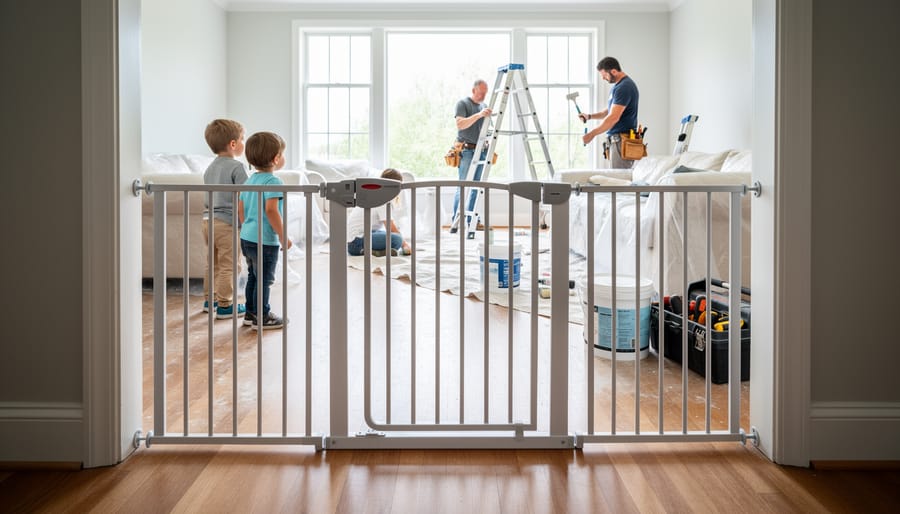
Before you hammer the first nail, you need to talk about safety, and not just the “don’t touch the saw” kind. With young children in your home, a renovation introduces hazards that go far beyond what you’d face on your own. You can prevent home hazards with proper planning, but only if you implement strict safety measures from day one.
Start by creating a physical barrier between your children and the construction zone. Baby gates won’t cut it here. You need solid doors with locks or heavy-duty plastic sheeting secured floor-to-ceiling if you’re blocking off an open doorway. The goal is to make it impossible for a curious toddler to wander in, not just inconvenient.
Air quality matters more than you think. Construction dust contains particles that irritate little lungs, and if you’re working with older materials, it could contain lead, asbestos, or mold. Run HEPA air purifiers in the rooms where your kids spend time, seal the work area completely with thick plastic and tape, and keep windows open in non-work areas when weather permits. If contractors are sanding, grinding, or doing major demolition, that’s a “leave the house” day. Pack up the kids and go to the park, a friend’s place, or the library for the afternoon.
Noise is another underestimated risk. Jackhammers, saws, and drills can damage young ears if exposure is prolonged. During the loudest work, think tile removal or wall demolition, either get the kids out of the house or provide proper hearing protection if they’re old enough to keep it on.
Finally, know your stop conditions. If you see exposed wiring a child could reach, open plumbing that poses a drowning risk for a crawling baby, or contractors working without proper dust containment, halt the work immediately. If your child develops a persistent cough, has trouble breathing, or shows signs of lead exposure (irritability, loss of appetite, fatigue), stop everything and call your pediatrician. Your family’s health isn’t negotiable, and no kitchen is worth risking it.
Your Step-by-Step Survival Plan
Step 1: Plan the Timeline Around Your Family’s Needs
Talk with your contractor before they start demolition. Ask when the noisiest, messiest work will happen, demo day, cabinet installation, major plumbing changes, and try to schedule those phases when your kids won’t be home. If your toddler naps from 1-3 PM, request that jackhammering or loud sawing happen during that window. School hours are gold for families with older kids.
Consider the season carefully. Summer means kids are home all day, but you can send them outside or to camps. Winter keeps everyone cooped up indoors, intensifying the chaos. Some families strategically plan grandparent visits or ask relatives to take the kids for the worst three or four days.
Build in extra time. Renovations always run long, and adding “but my kids need…” to every delay makes it worse. If the contractor says two weeks, mentally prepare for three. Schedule the project to end before major events like birthdays or holidays, so you’re not hosting in a construction zone. Flexibility here saves your sanity when the tile shipment arrives late or permits take longer than expected.
Step 2: Set Up Your Temporary Kitchen Station
Pick a room that won’t make you insane, the dining room works for most families, or a cleared corner of the garage if you can control the temperature. You need access to water and electrical outlets, and enough space that you’re not cooking with a toddler grabbing your legs every two seconds.
Set it up like an actual kitchen, not a random pile of appliances. Put your microwave, toaster oven, and electric kettle on one surface for cooking. Use a folding table or cleared buffet as your prep zone with cutting boards, knives, and basic utensils in a bin. Designate one area for cleanup, even if it’s just a plastic tub for dirty dishes you’ll wash in the bathroom sink.
The game-changer? A low shelf or basket where your kids can grab their own snacks and water bottles. Stock it with things that won’t create disasters: crackers, granola bars, pouches, nothing that requires you to stop what you’re doing. This cuts down the constant “I’m hungry” interruptions by about sixty percent.
Keep your everyday dishes, a pot, a pan, and one good knife here. Everything else stays packed. The less you drag out, the less you’ll want to cry when you’re doing dishes in a laundry sink for the fourth time today.
Step 3: Prep a Week of Easy, No-Cook Meals
Before demolition starts, spend a Sunday prepping meals you can grab without thinking. Your goal isn’t gourmet, it’s keeping everyone fed with minimal effort and zero full kitchen.
Stock your cooler or mini-fridge with breakfast basics: overnight oats in mason jars (mix oats, milk, and fruit the night before), pre-portioned yogurt cups, and hard-boiled eggs. For lunch and dinner, prep ingredients that work cold or need only reheating. Buy two rotisserie chickens and shred the meat for sandwiches, wraps, or tossed with pasta. Make a big batch of pasta salad, cut vegetables into snack-sized portions, and portion out hummus or cheese cubes.
Your slow cooker becomes your best friend. Toss in a whole chicken with vegetables in the morning, or let chili simmer while you manage chaos. Pre-chop onions and garlic so you’re not stuck doing knife work on a folding table.
Keep a backup stash of kid-approved snacks they can reach independently, crackers, fruit pouches, granola bars, so you’re not fielding constant “I’m hungry” requests during work hours. This isn’t the week to introduce new foods or fight nutrition battles.
Step 4: Create Kid-Free Zones and Explain Boundaries
Establish physical barriers before the first hammer swings. Install baby gates at every entrance to the work zone, even if your kids are past toddler age, they’re visual reminders that the space is off-limits. If gates won’t work, lock the door and keep the key somewhere children can’t reach. Bright caution tape across doorways works surprisingly well with older preschoolers who understand symbols.
Now comes the harder part: explaining why they can’t go in. For toddlers, keep it simple and repetitive: “Sharp tools hurt. We don’t touch.” With preschoolers, you can be more specific: “The workers have power tools that are dangerous for kids. That’s why only grown-ups go in there.” School-age children often respond well to being treated like helpers: “Your job is keeping your brother away from the construction zone while my job is checking on the workers.”
Expect testing. Kids will push boundaries dozens of times in the first few days. Stay calm but firm every single time. Walk them back, repeat the rule, and redirect to something else. Consistency matters more than lengthy explanations. If you bend the rule once because you’re exhausted, you’ll spend the next week re-establishing it.
Step 5: Establish a Daily Routine That Works Around the Chaos
Your kids won’t remember the construction details, but they’ll remember whether life felt completely upended. Stick to your usual wake-up and meal times, even if breakfast happens at a folding table in the living room. Keep your bedtime routine exactly the same, same bath time, same stories, same sequence. This consistency becomes their anchor when everything else feels chaotic.
Schedule outdoor time or library visits during the noisiest work hours, typically mid-morning. If contractors are demolishing cabinets at 10 a.m., that’s when you’re at the park. Plan these outings the night before so you’re not scrambling.
Reframe the inconvenience as something special. Eat dinner picnic-style in the backyard. Let kids choose where to have breakfast. Make lunch an indoor camping adventure. These small touches preserve your relationship habits and create positive memories during what could otherwise feel like pure stress. Your toddler might actually enjoy eating cereal on a blanket in their playroom.

Step 6: Manage Dust, Noise, and Disruption Daily
Start each morning with a quick cleanup of the living areas your kids use most, dust settles overnight, and wiping surfaces before breakfast keeps respiratory irritation at bay. Run air purifiers continuously in bedrooms and play spaces, changing filters more often than usual.
Seal the work zone completely with heavy plastic sheeting taped floor to ceiling. Check it daily for gaps where dust escapes, especially around doorways.
During demolition or tile cutting, plan outings. Even a trip to the park or a friend’s house protects little lungs better than any filter. If you must stay home, white noise machines in bedrooms mask jarring sounds during nap time. For older toddlers sensitive to jackhammering or saws, child-safe noise-reducing headphones make the difference between meltdowns and manageable moments.
Keep kids engaged with contained activities far from the chaos, set up a craft station in a back bedroom, build a blanket fort, or declare screen time guilt-free during the noisiest hours. Staying calm yourself helps enormously; peaceful parenting techniques like acknowledging their frustration (“I know the loud noises are scary”) validate their feelings while maintaining boundaries around the construction zone.

How to Know You’re on Track (and When to Adjust)
You’ll know your renovation survival plan is working when your kids maintain their usual sleep patterns, mealtimes happen without major battles (even if it’s cereal for dinner), and you’re not waking up with a knot of dread in your stomach. The renovation feels challenging but manageable. Your children might be curious about the construction, but they’re respecting boundaries. You’re able to laugh occasionally at the absurdity of brushing teeth in the laundry room sink. Progress is visible in the kitchen, and while life isn’t normal, it’s functioning.
Red flags mean it’s time to pivot. If your toddler suddenly starts having accidents after months of being potty trained, that’s stress showing up. Constant tantrums that weren’t typical before, sleep disruptions lasting more than a few nights, or your child developing a persistent cough or respiratory issues all signal you need to change something now. When you find yourself snapping at your kids over small things or your partner over nothing at all, those are signs the emotional challenges have crossed from difficult into unsustainable.
Here’s what adjusting looks like in real life: ordering takeout three nights in a row instead of forcing meal prep. Sending the kids to grandma’s house for the weekend. Taking them to the park for two hours during the loudest demolition work. Hiring a babysitter so you can deep-clean the living space without little ones underfoot. Sometimes it means asking the contractor to pause for a day because everyone needs a break.
You’re not failing if you need to adjust. You’re being a responsive parent who recognizes when the current approach isn’t serving your family. Give yourself permission to be flexible, imperfect, and human through this process.
What to Do When Things Go Wrong
Even the best-laid plans hit snags when you’re juggling power tools and potty training. Here’s how to handle the most common crisis moments without spiraling.
When the contractor runs late during pickup time: Text them immediately with your hard deadline, then call a backup person, neighbor, friend, or partner, to grab your kids if needed. Keep a list of three people who can help in a pinch. If this becomes a pattern, have a direct conversation with your contractor about your non-negotiable schedule. You’re not being difficult; you’re protecting your children.
If kids breach the work zone: Stay calm, remove them immediately, and don’t shame them. Young children forget rules under stress. Reinforce the physical barrier (add another gate, lock the door, tape a red X at their eye level) and explain again why it’s dangerous. If breaches continue, someone needs to actively supervise during work hours, this might mean calling in help or pausing the project.
When tantrums multiply: Recognize this as a stress response, not defiance. Your kids feel the household tension even if you’re hiding it well. Lower your expectations everywhere else, skip baths, serve cereal for dinner, allow extra screen time. Increase physical affection, spend one-on-one time outside the house, and don’t feel guilty about survival mode. This phase is temporary.
If your temporary kitchen isn’t working: Adjust immediately rather than powering through misery. Move it to a different room, simplify your meal plan further, or invest in one more appliance that actually helps. Ordering takeout three nights this week doesn’t make you a failure, it makes you practical.
Common Questions from Moms in the Middle of Renovations
How long will this really take?
Plan for your contractor’s estimate plus 30-50% extra time. A kitchen renovation typically runs 4-8 weeks for a standard remodel, but delays happen constantly with permitting, material deliveries, and unexpected issues behind walls. Building buffer time into your mental timeline saves you from constant disappointment and helps you plan childcare or temporary arrangements more realistically.
Can I survive without a kitchen sink?
Yes, but it requires setup. You’ll need a washing station somewhere else, a large basin in a bathroom, a utility sink in the basement, or even a dish tub system in your temporary kitchen. Fill one tub with soapy water and another with rinse water. It’s inconvenient, but doable for several weeks. The bigger challenge is often the emotional weight of the disruption, not the actual mechanics.
What if my toddler won’t stay out of the construction zone?
Physical barriers are non-negotiable if verbal boundaries aren’t working. Use baby gates stacked if needed, lock the door and keep the key with you, or install a temporary barrier that reaches the ceiling. For persistent boundary-testers, combine the physical block with increased supervision during work hours. Some moms find that scheduling activities outside the home during the loudest work times prevents the constant pull toward the forbidden zone. You’re not failing if your child keeps trying, you’re dealing with normal toddler curiosity in an abnormal situation.
How do I keep my baby safe from dust?
Seal the construction area with heavy plastic sheeting taped to ceiling and walls, run HEPA air purifiers in living spaces, and keep the baby in rooms farthest from the work zone during active construction. Wipe surfaces daily and consider a temporary stay elsewhere during demolition and sanding phases.
Is it worth hiring help or sending kids to daycare temporarily?
If your budget allows, even part-time help during the most disruptive phases can be the difference between surviving and spiraling. Extra childcare, a mother’s helper, or short-term daycare isn’t an indulgence, it’s a practical tool for managing an genuinely difficult situation.
Should we move out during renovation?
If you have young children and the budget or family support to stay elsewhere for 2-4 weeks, it can dramatically reduce stress. Consider moving out during demolition and the messiest construction phases, then returning for the finishing work.
The questions you’re asking right now are the same ones every mother in this situation asks. There’s no perfect answer that works for every family, but trusting your instincts about what your kids can handle and what you need to stay sane will guide you better than any expert advice.
You’re in the thick of it now, and some days it probably feels impossible. The noise, the dust, the endless meals cobbled together from a microwave perched on your dining table, it’s a lot. But here’s the truth: you’re handling something genuinely difficult, and the fact that you’re still showing up for your kids every day means you’re doing an amazing job.
This phase won’t last forever. In a few weeks or months, you’ll have a kitchen that works for your family, and this chaotic season will fade into a story you tell at dinner parties. Right now, though, it’s okay to feel overwhelmed. It’s okay to order takeout three nights in a row, to let screen time limits slide, or to call in backup from friends or family.
Lowering your standards temporarily isn’t giving up. Asking for help isn’t weakness. Prioritizing your sanity and your children’s emotional wellbeing over keeping everything perfect is exactly what good parenting looks like. You’re teaching your kids resilience by showing them how to adapt when life gets messy.
The finished kitchen will be worth it. But more importantly, you’ll get through this because you already are. One meal, one nap time, one day at a time. You’ve got this.