

The challenges of motherhood are the physical, emotional, mental, and social difficulties mothers face while raising children, ranging from sleep deprivation and identity shifts to overwhelming responsibility and societal pressure. These struggles are real, widespread, and nothing to be ashamed of.
If you’re reading this because motherhood feels harder than you expected, you’re not alone. The gap between the joyful Instagram posts and the reality of your daily life isn’t a sign you’re failing. It’s evidence that motherhood is genuinely demanding work that asks everything of you, often simultaneously.
What makes these challenges so difficult is that they’re rarely discussed honestly before you become a mother. Friends share nursery photos but skip the part about crying in the shower because you haven’t slept more than three hours straight in weeks. Family members recall sweet baby moments but forget to mention the bone-deep exhaustion or the strange grief of losing parts of yourself you didn’t know would disappear.
This article breaks down the emotional challenges mothers face most often, why they happen, and what actually helps. You’ll find clear explanations of common experiences like touched-out feelings, identity loss, and invisible mental load. More importantly, you’ll discover that the hard parts of motherhood don’t mean you’re doing it wrong.
The emotional weight of raising children is sometimes beautiful, sometimes crushing, and almost always more complex than anyone prepared you for. Understanding what you’re experiencing and why it’s happening is the first step toward feeling less isolated and more equipped to ask for what you need.
What Emotional Challenges During Motherhood Really Mean

Emotional challenges during motherhood aren’t a sign of weakness or failure. They’re the natural psychological and physiological responses to one of life’s most profound transitions, ranging from fleeting moments of tearfulness to persistent struggles that affect your daily functioning.
At the mildest end, you might experience what’s often called the “baby blues”, sudden crying spells, mood swings, or feeling overwhelmed in the first two weeks postpartum. These feelings affect up to 80% of new mothers and typically resolve on their own as hormones stabilize and you adjust to your new reality.
Beyond the baby blues, emotional challenges can take several forms:
- Baby Blues
- Brief emotional volatility in the first two weeks after birth, characterized by crying, anxiety, and mood swings that resolve without intervention.
- Postpartum Anxiety
- Persistent worry, racing thoughts, or physical symptoms like heart palpitations that interfere with sleep or bonding with your baby.
- Maternal Guilt
- The pervasive feeling that you’re not doing enough or making the right choices, often accompanied by constant second-guessing.
- Identity Shift
- The emotional weight of reconciling who you were before motherhood with who you’re becoming, sometimes involving grief for your former self.
The difference between normal adjustment and something requiring extra support isn’t always clear-cut. If your emotions persist beyond two weeks, intensify rather than improve, or prevent you from caring for yourself or your baby, that’s when professional screening becomes important. The ACOG guideline for screening recommends assessment at least once during the perinatal period because early identification leads to better outcomes.
What matters most is recognizing that emotional challenges exist on a spectrum. You don’t need to hit a clinical threshold to deserve support, and experiencing them doesn’t mean you’re failing at motherhood.
How These Challenges Show Up in Daily Life
The Hormonal Shift
Within hours of birth, your body experiences what might be the most dramatic hormonal drop you’ll ever go through. Estrogen and progesterone, which soared during pregnancy, plummet suddenly, and this isn’t just a biological footnote. These hormones directly influence neurotransmitters like serotonin and dopamine, which regulate your mood, stress response, and emotional stability. The connection between progesterone and emotion regulation is particularly significant during this postpartum period.
At the same time, prolactin rises to support breastfeeding, while oxytocin surges during nursing and skin-to-skin contact. It’s an emotional cocktail that can leave you crying over a nappy advert one moment and flooded with love the next. Your brain is literally recalibrating, which is why those first weeks can feel emotionally unpredictable, not because you’re failing, but because your body is adjusting to monumental change.
The Sleep-Emotion Connection

Sleep deprivation doesn’t just make you tired, it fundamentally changes how your brain processes emotions. When you’re running on broken sleep night after night, your amygdala (the part of your brain that handles emotional responses) becomes hyperactive while the prefrontal cortex (which helps regulate those responses) struggles to keep up. Research confirms that sleep deprivation worsens emotional regulation making small frustrations feel enormous and ordinary stress feel unbearable.
This is why you might burst into tears over spilled milk or snap at your partner for a minor comment, your exhausted brain simply can’t filter or moderate emotions the way it normally would. You’re not overreacting or losing control; you’re experiencing a predictable physiological response to chronic sleep loss. The frustrating truth is that the very thing you need most to stabilize your emotions, consistent, restorative sleep, feels impossibly out of reach when you’re caring for a newborn.
The Identity Transformation
The transition to motherhood can feel like waking up as a different person, one you didn’t fully agree to become. Your days once revolved around your own schedule, interests, and identity. Now someone else’s needs dictate every moment, and the woman you were feels impossibly distant.
This isn’t just about postpartum body changes or adjusting to a new routine. It’s mourning parts of yourself while simultaneously trying to embrace a role you’re still learning. You might grieve spontaneous plans, uninterrupted conversations, or simply feeling competent and in control. Many mothers describe looking in the mirror and seeing a stranger, physically, yes, but emotionally too.
This identity shift carries real emotional weight because you’re not replacing your old self; you’re integrating motherhood into who you are. That integration takes time, and the disorientation you feel during this process is normal, even if it’s uncomfortable.
Common Types of Emotional Challenges Mothers Face
Overwhelm and Anxiety
Overwhelm in motherhood often feels like drowning in a sea of never-ending tasks while your mind races through worst-case scenarios. You might lie awake mentally cataloguing everything, did I sterilize that bottle, when’s the next feeding, is that rash normal?, even when your body desperately needs sleep. The to-do list multiplies faster than you can complete it, and the sense that you’re constantly behind becomes exhausting.
This anxiety isn’t weakness or poor planning. Your brain is adapting to unprecedented responsibility while operating on minimal rest. Many mothers describe a background hum of worry that never quite switches off, making even small decisions feel monumental. When you notice your chest tightening at the thought of leaving the house or feel paralyzed choosing between equally mundane tasks, that’s overwhelm signaling you need support, not perfection.
Guilt and Self-Doubt
Guilt is perhaps the most universal emotional burden mothers carry, that nagging voice insisting you’re failing somehow. You question every decision: Is formula okay? Am I holding her too much? Should I have gone back to work? The mental loop never quite stops.
This guilt rarely stems from actual mistakes. It emerges from the impossible expectation that you should be perfect, that every choice matters enormously, that other mothers have it figured out while you’re scrambling. Social media amplifies this, showing curated moments that feel like indictments of your reality.
Self-doubt feeds guilt. You second-guess instincts that are probably sound, dismiss your knowledge of your own baby, and absorb every raised eyebrow or unsolicited comment as confirmation you’re doing it wrong. The truth? Most parenting choices matter far less than the loving presence behind them.
Loneliness and Isolation
The paradox of motherhood is that you’re never physically alone, yet the loneliness can feel crushing. Your phone stays quiet while group chats you used to follow religiously buzz on without you. Friends make plans that don’t account for nap schedules or early bedtimes. Conversations with your partner revolve around logistics rather than connection.
This isolation stems from multiple sources. Your daily reality has shifted dramatically while everyone else’s life continues unchanged. You’re exhausted in ways that are hard to explain to people who haven’t lived it. Even in groups of other mothers, you might feel like you’re the only one struggling while everyone else seems to have it together.
The physical isolation compounds the emotional distance. When you’re home day after day, the adult interaction you crave shrinks to brief exchanges with your partner or small talk at the grocery store.
Loss of Self
The grief that comes with motherhood catches most women off guard. You might find yourself missing the freedom to spontaneously meet friends, pursue hobbies without guilt, or simply finish a cup of coffee while it’s hot. These aren’t shallow concerns, they’re genuine losses.
This transition involves mourning parts of your former identity: your career momentum, your social life, even your body’s predictability. At the same time, you’re adjusting to this new role without a clear map of who you’re supposed to become.
What makes this particularly difficult is that you’re expected to feel only joy. When you feel sadness alongside love for your baby, it can trigger confusion and shame. But missing your old self doesn’t mean you don’t adore your child, it means you’re human, processing a profound life change.
Anger and Resentment
Anger at your crying baby at 3 a.m., resentment toward your partner who sleeps through the night, or rage at how invisible your needs have become, these feelings are shockingly common yet rarely voiced. Many mothers carry shame about experiencing them, but anger often signals unmet needs: rest, support, recognition, or simply the loss of autonomy. These emotions don’t make you a bad mother; they make you human and overwhelmed.
When and How These Challenges Impact Your Motherhood Journey
In Your Relationship with Your Baby
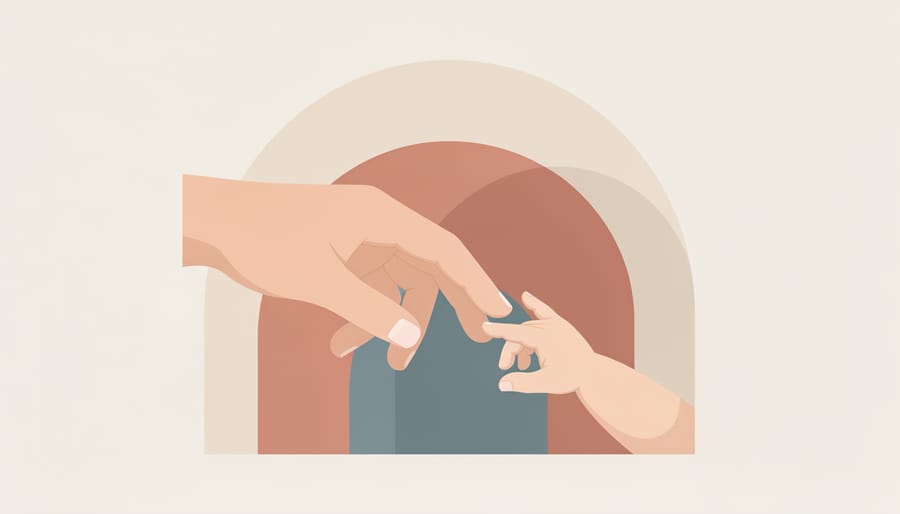
When you’re drowning in anxiety or sadness, connecting with your baby can feel like moving through fog. You might find yourself going through the motions during feeds without feeling present. Maybe you’re hyper-focused on doing everything “right” to the point where you miss your baby’s cues. Some mothers describe feeling emotionally numb even while physically caring for their child, which creates crushing guilt.
These disconnections don’t mean you’re failing. Your brain is managing overwhelming stress, and that affects how you process and respond to everything, including your baby’s signals. The bond doesn’t have to happen instantly or constantly.
Start small: during one feeding or diaper change each day, put your phone away and focus only on your baby’s face. Notice one thing, their breathing, a sound they make, how they grip your finger. These micro-moments build connection even when the bigger emotional picture feels complicated. Talk to your baby about how you’re feeling. They won’t understand the words, but hearing your voice matters, and speaking the truth aloud can ease your burden.
In Your Partnership and Family Dynamics
Motherhood doesn’t just change you, it reshapes every relationship around you. The partner who once knew exactly how to make you laugh might now say the wrong thing at the worst moment. Family members who want to help might instead feel intrusive or critical. You’re navigating new roles while running on empty, and the people closest to you are adjusting too.
Many mothers describe feeling distant from their partner, not because the love is gone, but because there’s barely time to connect beyond logistics. Resentment builds when you’re the only one who hears the baby cry at night, or when your partner’s life seems unchanged while yours has been completely rewritten.
These strains are normal, even in strong relationships. The key is recognizing that emotional challenges affect your capacity for patience, communication, and compromise. When you’re overwhelmed or anxious, small frustrations become big fights. Acknowledging this pattern, to yourself and your partner, creates space for understanding rather than blame.
In Your Sense of Self and Future
Emotional challenges don’t just affect today, they can reshape how you see yourself and what you imagine for tomorrow. When you’re caught in cycles of overwhelm or self-doubt, it becomes hard to recognize the capable, multidimensional person you still are. You might struggle to make decisions about returning to work, pursuing interests, or even planning simple outings, because confidence in your own judgment feels shaky.
Many mothers describe feeling stuck between two versions of themselves, who they were before and who they’re becoming now, without clarity on when you’ll feel better or what the future holds. This uncertainty can breed anxiety about whether you’ll ever reclaim parts of yourself you miss, or whether wanting those parts back means you’re failing at motherhood.
These identity questions are normal, not permanent. The emotional challenges you’re navigating now don’t determine your trajectory. As you process this transition and find support, your vision for the future will come back into focus, not as a return to who you were, but as an evolution into someone who integrates both motherhood and your other dimensions. That clarity takes time, and it starts with acknowledging that this liminal space is difficult without letting it convince you it’s forever.
Real Stories from Mothers Who’ve Been There
Sarah, mother of two: “I spent the first three months constantly checking if my baby was breathing. I’d wake up every hour even when she was sleeping, my heart pounding with this nameless dread. I thought I was losing my mind until I told my midwife and she said, ‘That’s anxiety, and it’s incredibly common.’ Just having a name for it made it feel less scary. I learned to recognize when the thoughts were spiraling and started using breathing techniques. It took time, but eventually the panic quieted.”
Maya, first-time mum at 34: “The guilt was relentless. I wasn’t breastfeeding as easily as everyone made it sound, and I convinced myself I was failing my daughter from day one. My partner finally asked me, ‘Would you judge another mother this harshly?’ and I realized I wouldn’t. I was holding myself to an impossible standard. That shift in perspective didn’t fix everything overnight, but it started me on the path to self-compassion.”
Jenna, mother of twins: “I felt so alone, even surrounded by people. My friends without kids didn’t understand why I couldn’t just ‘get a babysitter and come out.’ My husband was supportive but couldn’t relate to what I was experiencing physically and emotionally. I found an online group of other twin mums, and finally hearing ‘me too’ from someone who got it made me realize I wasn’t broken or ungrateful. I was just struggling with something really hard, and that was okay.”
Practical Ways to Support Yourself Through Emotional Challenges
You don’t need to wait until you’re completely falling apart to start taking care of yourself. Small, intentional actions can create real relief even in the midst of overwhelming days.
Start with what you can control right now. When emotions feel intense, focus on the immediate moment rather than the endless to-do list. Take three deep breaths. Step outside for thirty seconds. Drink a full glass of water. These aren’t cure-alls, but they can pull you back from the edge when everything feels like too much.
Physical care directly affects emotional wellbeing, especially during the postpartum period. Prioritizing rest whenever possible, eating regular meals with protein, and making time for basic hygiene all sound obvious, but they’re often the first things to disappear when you’re struggling. Even ten minutes for a shower can reset your nervous system. Learning about realistic self-care after birth helps you set expectations that support rather than stress you.
Connection matters more than you might realize. Text a friend who gets it. Join an online mom group where you can be honest about hard days. Ask your partner or a family member for twenty minutes alone without having to explain why you need it. Isolation amplifies every difficult emotion; even small touchpoints with other people can provide perspective and relief.
Here are practical strategies that work across different situations:
- Keep a running list on your phone of things that help when you’re overwhelmed, a specific playlist, a grounding exercise, a person to call
- Set a daily reminder to check in with yourself about what you actually need, not just what the baby needs
- Accept help with specific tasks rather than waiting for someone to read your mind
- Move your body gently when possible, a walk around the block, stretching on the floor, dancing in the kitchen
- Write down what you’re feeling without filtering or judging it; getting it out of your head helps
- Build in one thing each day that’s just for you, even if it’s five minutes with coffee while it’s still hot
Lower your standards temporarily. This isn’t forever, but right now, survival mode is valid. Dishes in the sink, takeout for dinner, letting the baby watch you scroll your phone, none of this makes you a bad mother. You’re doing hard work with limited resources, and perfectionism only adds another burden.
Track patterns if you can. Notice when emotions feel hardest. Is it a particular time of day? After certain interactions? During specific activities? Understanding your triggers helps you prepare and respond rather than feeling blindsided every time.
When to Reach Out for Professional Support

Knowing when to reach out isn’t always obvious, especially when you’re in the thick of it. But certain patterns suggest your emotional challenges could benefit from professional support.
If you’ve been feeling consistently low, anxious, or disconnected for more than two weeks, that’s a signal worth paying attention to. The same goes if your emotions are interfering with basic daily tasks, like caring for your baby, eating regularly, or getting any rest when you have the chance. Thoughts of harming yourself or your baby, even fleeting ones, require immediate professional attention. These aren’t signs of failure; they’re signs you need the right help.
Persistent feelings that you’re not bonding with your baby, intrusive scary thoughts that won’t let up, or a sense that you’re just going through the motions without really feeling present, these also warrant a conversation with someone trained to help.
Start with your GP or obstetrician, who can assess what’s happening and refer you to appropriate support. Perinatal mental health specialists, psychologists who focus on maternal wellbeing, and support groups led by trained facilitators are all valuable options. Many communities offer dedicated maternal mental health services, and telehealth has made accessing specialists much easier.
Reaching out doesn’t mean you’re broken. It means you’re taking your wellbeing seriously, which ultimately serves both you and your baby.
How The Emotional Challenges of Motherhood Works
Emotional challenges during motherhood work through a cascade of interconnected biological, psychological, and social changes that all hit at once. Your brain and body are recalibrating after pregnancy and birth while you’re simultaneously learning an entirely new role with zero breaks.
Biologically, plummeting estrogen and progesterone trigger mood instability, while elevated prolactin affects how your brain processes stress. Cortisol levels spike from sleep deprivation, keeping your nervous system on high alert. This hormonal turbulence doesn’t follow the real postpartum timeline most people imagine, it can persist for months.
Psychologically, your brain is rewiring itself for caregiving, which means heightened vigilance and emotional sensitivity. You’re processing a major identity shift while managing unrealistic postpartum expectations about how you should feel and function.
Socially, reduced adult interaction and support intensifies everything. When you’re isolated, small challenges feel insurmountable because you lack perspective and help.
These mechanisms compound each other. Poor sleep worsens hormone regulation, which increases anxiety, which disrupts sleep further. Understanding this cycle helps you see that these challenges aren’t personal failures, they’re predictable responses to extraordinary circumstances.
Common Questions About Emotional Challenges in Motherhood
Is it normal to feel this way?
Yes, completely normal. The vast majority of mothers experience some level of emotional difficulty during the transition to motherhood, whether that’s occasional overwhelm, persistent anxiety, or unexpected sadness. These feelings don’t mean you’re failing or that something is wrong with you, they’re a natural response to one of life’s most profound changes.
How long will these emotional challenges last?
There’s no single timeline because every mother’s experience is different. For many, the intensity of emotional overwhelm eases as your baby develops a routine and you find your rhythm, typically around three to six months. However, some challenges like identity shifts can continue evolving throughout the first year and beyond, which is why ongoing support matters.
Will I ever feel like myself again?
You will feel like yourself, but it’s often a new version of yourself rather than returning to exactly who you were before. Most mothers find that as they move through the early months and years, they reconnect with core parts of their identity while integrating their role as a mother, creating a sense of wholeness that feels authentic even if it looks different than before.
What if I don’t feel an instant bond with my baby?
Not bonding immediately is more common than you think, and it doesn’t predict the quality of your future relationship with your child. For many mothers, deep attachment develops gradually over weeks or months as you get to know your baby and build confidence in caring for them. If you’re concerned about bonding difficulties, talking with your healthcare provider can help you work through any barriers.
Remember that questions about your emotional wellbeing deserve attention, not dismissal. If you’re wondering whether what you’re experiencing is normal, that question itself is worth exploring with someone who can listen without judgment. Your maternal health provider, a therapist who specializes in perinatal mental health, or even a trusted friend who’s been through early motherhood can offer perspective that helps you understand your experience better.
These questions often surface during quiet moments when you’re feeding your baby at 3am or watching other mothers who seem to have it all together. Be gentle with yourself in those moments. The fact that you’re asking these questions shows you’re reflecting on your experience and seeking understanding, which is exactly what you need to do to navigate this transition with awareness and self-compassion.
The emotional challenges you face as a mother don’t diminish your love for your child or your capability as a parent. They’re part of a profound transition that millions of women experience, and navigating them doesn’t mean you’re failing. It means you’re human.
You’re allowed to struggle and still be a wonderful mother. You’re allowed to ask for help and still be strong. The moments when you feel overwhelmed, guilty, or lost don’t cancel out the countless moments of connection, tenderness, and fierce love you share with your baby. Your worth as a mother isn’t measured by how perfectly you handle every challenge, but by your willingness to show up, even on the hardest days.
Remember that the voices telling you you’re not enough are lying. The comparison trap, the impossible standards, the whispers of self-doubt, they don’t reflect reality. What’s real is the effort you’re making, the love you’re giving, and the courage it takes to navigate this journey authentically.
Reaching out for support, whether to a friend, a counselor, or a support group, isn’t an admission of weakness. It’s an act of self-care that benefits both you and your family. You deserve compassion, understanding, and the space to process what you’re experiencing.
You’re not alone in this. Other mothers have walked this path, felt these feelings, and found their way through. You will too.