

Six weeks after giving birth, I stood on the scale expecting my pre-pregnancy body to have magically returned. Instead, I was still carrying 20 pounds of baby weight, swollen feet, and what felt like someone else’s midsection. Sound familiar?
You’re not alone, and you’re definitely not broken. The postpartum weight loss timeline looks different for every single mother, but understanding what actually happens in your body during those crucial first months can ease so much of the anxiety and self-judgment.
Here’s the truth most people won’t tell you: immediately after delivery, you’ll lose about 12-13 pounds from the baby, placenta, and amniotic fluid. Over the next week, another 5 pounds typically disappears as excess fluid leaves your system. That’s the easy part.
The remaining weight? That’s where your unique timeline begins. Research shows that most women take 6-12 months to return to their pre-pregnancy weight, but for many mothers, this process extends well beyond a year. Some shed the pounds within months. Others find themselves still working toward their goal two years later. Both experiences are completely normal.
Your timeline depends on dozens of factors you can influence and many you cannot. How much weight you gained during pregnancy, whether you’re breastfeeding, your sleep quality, stress levels, genetics, and even the number of previous pregnancies all play a role.
This article breaks down the realistic month-by-month changes you can expect in your postpartum body, backed by research and real stories from mothers who’ve been exactly where you are right now. You’ll learn what’s happening hormonally, physically, and emotionally at each stage, plus which factors might speed up or slow down your personal timeline.
Most importantly, you’ll discover why the number on the scale tells only a fraction of the story about your postpartum recovery.
What Happens to Your Body in the First Week After Birth
The moment you deliver your baby, you’ll experience the most dramatic weight loss of your entire postpartum journey. That initial drop is real and immediate. You’re saying goodbye to the weight of your baby (typically 6 to 9 pounds), the placenta and amniotic fluid (another 3 to 4 pounds combined), plus some extra blood volume. Just like that, you’ve already lost somewhere between 10 and 13 pounds before you even leave the delivery room.
Over the next few days, your body continues to shed water weight at a surprisingly rapid pace. Your kidneys kick into high gear, working to eliminate the extra fluids you retained during pregnancy. Many women notice they’re peeing constantly during this time, and that’s completely normal. You might lose another 5 to 8 pounds during that first week as this fluid retention resolves. If you’re breastfeeding, that process might happen even faster.
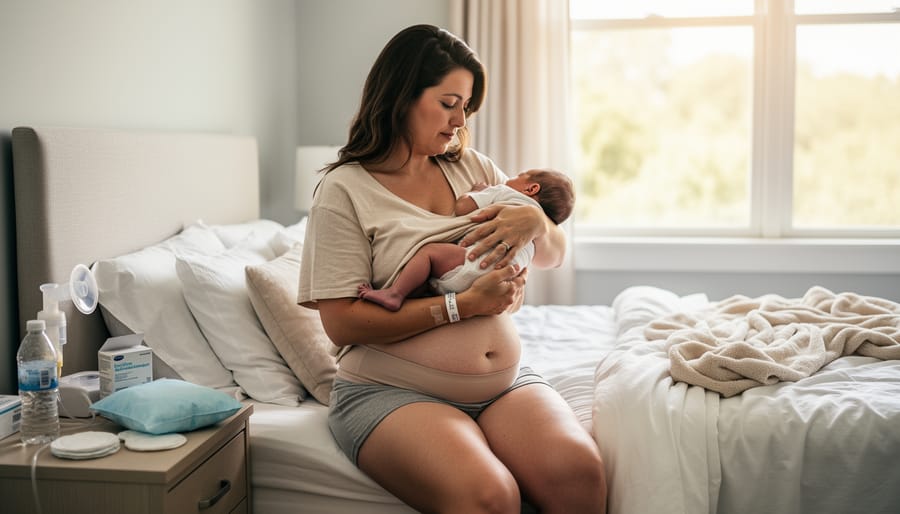
Here’s what catches many new moms off guard: even as the scale drops, you might still look and feel swollen. Your belly won’t magically flatten. Your ankles might still be puffy. Some women actually experience more swelling in their hands and feet after delivery than they had during pregnancy, especially if they received IV fluids during labor. This doesn’t mean something’s wrong or that you’re not losing weight. Your body is just prioritizing which fluids to release first.
Sarah, a mom of two, remembers feeling confused when she weighed 15 pounds less three days postpartum but still couldn’t fit into any of her pre-pregnancy clothes. “I thought I’d at least get into my regular jeans,” she laughs. “But my body needed more time.” That’s the reality for most of us. The initial weight loss is encouraging, but it’s just the beginning of a much longer process.
The First Six Weeks: Your Body’s Recovery Phase
What’s Realistic to Expect
Here’s the truth most of us wish we’d known before comparing ourselves to celebrities who “bounce back” in weeks: most women lose only about 13 pounds immediately after delivery. That’s the baby, placenta, and amniotic fluid gone in one go.
Over the next six weeks, you’ll gradually shed more through water weight and natural body adjustments. Research shows that by six months postpartum, many women have lost about half their baby weight. But here’s where it gets personal.
If you’re breastfeeding, you might lose weight more quickly because your body burns extra calories producing milk. Then again, some nursing moms find their bodies hold onto a bit of weight as a protective reserve. Both are completely normal. Your delivery experience matters too. A C-section recovery requires more healing time, which naturally affects when you can begin moving more. Complications like postpartum preeclampsia or healing from a traumatic birth add their own timelines.
Sarah, a mom of two, shared with me that she lost weight faster after her first baby than her second, despite doing everything “the same.” Different pregnancies, different bodies, different seasons of life.
The comparison game will steal your joy every single time. Your colleague’s timeline isn’t yours. Your sister’s experience won’t predict yours. What matters is that your body grew and delivered a whole human being, and it deserves patience as it heals at its own pace.
Why Your Body Needs This Time
Your body just spent nine months creating and sustaining life, and now it needs time to heal. During postpartum recovery your uterus is shrinking back to its pre-pregnancy size, your organs are shifting back into place, and your hormone levels are rebalancing. If you had a cesarean birth, you’re healing from major abdominal surgery. Even with a vaginal delivery, your pelvic floor needs recovery time.
These processes take energy. Lots of it. Your body is prioritizing healing over everything else right now, and that’s exactly as it should be. Restricting calories or pushing yourself too hard can actually slow down your recovery and affect your milk supply if you’re breastfeeding.
Sarah, a nutritionist and mom of two, shared her experience: “I tried to jump back into intense workouts at three weeks postpartum with my first. My bleeding increased, I felt exhausted, and my body sent clear signals to stop. With my second, I waited until eight weeks and listened to my body. The difference was night and day.”
Losing weight too quickly postpartum can lead to fatigue, decreased milk production, and nutrient deficiencies. Your body deserves patience right now, not pressure.
Months 2-3: When Things Start to Shift
Around the second and third month postpartum, you might notice something shifting. Maybe you wake up one morning and realize you actually feel somewhat rested. Or you catch a glimpse of yourself in the mirror and think, “Hey, I’m starting to look more like myself again.” This is when many moms see gradual weight loss begin to happen more consistently.
During this period, you could lose anywhere from 1-2 pounds per week if you’re focusing on nourishing yourself well and staying gently active. But here’s the thing: this is also when frustration can really set in. Your pre-pregnancy jeans still don’t fit, progress feels maddeningly slow, and everyone around you seems to have bounced back instantly (spoiler: they probably didn’t).
Sarah, a mom of two, remembers this phase vividly. “I was doing everything ‘right,’ but the scale barely moved. I wanted to cry every time I got dressed. Then my midwife reminded me that I still had hormones rebalancing, I was nursing around the clock, and my body was literally rebuilding itself. That perspective helped.”
Your energy levels are likely improving now, which means you can start thinking about incorporating gentle movement. Walking with your baby, some stretching, or modified exercises can feel amazing for both your body and mental health. Many healthcare providers give clearance for postpartum exercise around six weeks, but every situation is different.
The key during months two and three is remembering that slow doesn’t mean you’re failing. Your body is still healing, your hormones are still adjusting, and if you’re breastfeeding, your body is holding onto some extra stores for milk production. This isn’t the finish line. It’s barely the starting blocks.

The 3-6 Month Window: Where Progress Becomes Visible
How Breastfeeding Impacts Your Timeline
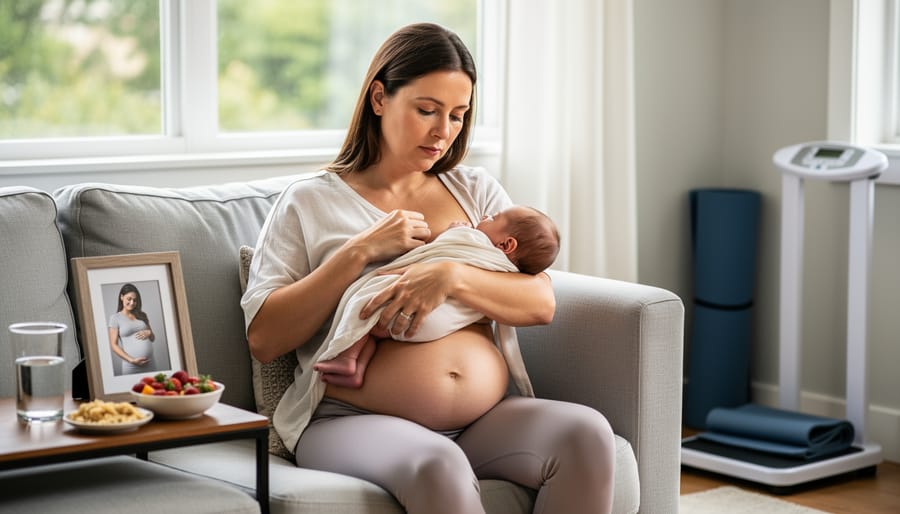
You’ve probably heard that breastfeeding helps you lose weight, and there’s truth to that. Nursing burns around 300-500 extra calories daily, which can certainly work in your favor. Many women find the pounds start melting off during those first few months of exclusive breastfeeding, seemingly without much effort.
But here’s what’s equally important to understand: some women hold onto weight while nursing, and that’s completely normal too. Your body is designed to prioritize feeding your baby, and for some mothers, that means maintaining fat stores to ensure milk production. Hormones, particularly prolactin, can influence how your body manages energy and stores fat during this time.
Sarah, a mom of two, shared her experience: “With my first baby, I dropped weight quickly while breastfeeding. With my second, those last 15 pounds didn’t budge until after I weaned. Same person, same commitment to breastfeeding, totally different outcomes.”
The connection between breastfeeding and weight loss varies dramatically from person to person. Some women notice increased hunger and appetite while nursing, which makes sense given the energy demands. Others find their metabolism doesn’t shift noticeably until they begin weaning.
Neither response is wrong or abnormal. Your body has its own timeline and priorities right now. If the scale isn’t moving as quickly as you’d hoped while breastfeeding, you’re not doing anything wrong. Focus on nourishing yourself well, staying hydrated, and trusting that your body knows what it needs to sustain both you and your baby.
When the Scale Doesn’t Tell the Whole Story
Here’s something many mamas discover a few months postpartum: they reach their pre-pregnancy weight but nothing fits the same. You’re not imagining things. Pregnancy fundamentally changes your body composition.
Think of it this way. Your body might weigh the same number on the scale, but the distribution is completely different. You may have less muscle mass than before pregnancy and more body fat, especially around your midsection. Your hips might be wider. Your ribcage may have expanded. These body composition changes are real and normal.
That’s why many women find that measurements and how their clothes fit tell a much more accurate story than the number on the scale. Your jeans might feel snug even though you’ve lost the weight. Or your bra size has changed permanently.
Sarah, a mom of two, put it perfectly: “I got back to my starting weight but my body was shaped differently. Once I accepted that and bought clothes that fit my new body, I felt so much better about myself.”
Your postpartum body did something incredible. It deserves appreciation, not comparison to a number from your past.
Months 6-12: The Gradual Journey Continues
If you’re six months postpartum and still looking at your pre-pregnancy jeans with skepticism, you’re in good company. This is where the weight loss journey typically slows down considerably, and that’s completely normal.
During the second half of your first postpartum year, many women find themselves in what I call the “plateau phase.” You might lose a pound here and there, or you might not see the scale budge for weeks at a time. Research shows that most women retain 5-10 pounds of their pregnancy weight at the one-year mark, and plenty retain more than that.
Sarah, a mom of two, shared with me: “Everyone talks about those first few months, but nobody warned me about month eight when I’d been stuck at the same weight for six weeks. I thought something was wrong with me.” Nothing was wrong with Sarah. Her body was simply adjusting to its new normal.
This is also when you might encounter the infamous “last 10 pounds” phenomenon. These pounds seem to cling stubbornly, no matter what you do. There’s actually a biological reason for this. Your body may be holding onto some extra fat stores, especially if you’re breastfeeding. Some research suggests that nursing mothers tend to hold onto about 5-7 pounds until they wean, as the body maintains energy reserves for milk production.
Sleep deprivation continues to play a role too. Your baby might be sleeping better than those newborn days, but you’re probably still not getting the quality rest your body needs for optimal metabolism. Add in the stress of returning to work for many moms, and weight loss naturally becomes a slower process.
Pediatrician Dr. Maria Chen often reminds her patients: “Your body has been through something extraordinary. Give it the grace and time it deserves to heal and adjust.”
The most important thing? How you feel matters more than any number on a scale.
What Affects Your Personal Timeline
Here’s the truth: your postpartum body follows its own schedule, and comparing yourself to others can drive you crazy. The speed at which you lose pregnancy weight depends on a complex mix of factors that are uniquely yours.
Your pregnancy weight gain plays a significant role. If you gained within the recommended range for your body type (typically 25-35 pounds for average-weight women), you might find the weight comes off more predictably. But if you gained more or less, that’s okay too. Your body simply has a different starting point, and that’s perfectly normal.
Breastfeeding can burn an extra 300-500 calories daily, but here’s what nobody tells you: it doesn’t guarantee faster weight loss for everyone. Some moms notice the pounds melting away while nursing, while others hold onto extra weight until they wean. Sarah, a mom of two from Oregon, shared that she didn’t lose her last 15 pounds until she stopped breastfeeding completely. “My body seemed to want that cushion while I was nursing,” she explained. Every body responds differently.
Sleep deprivation affects more than just your energy levels. When you’re running on three hours of broken sleep, your body produces more cortisol (a stress hormone) and has trouble regulating hunger hormones like ghrelin and leptin. This means you might crave quick energy from carbs and sugars, making mindful eating feel nearly impossible.
Your age matters too. Moms in their twenties often have an easier time losing pregnancy weight than those in their late thirties or forties. Metabolism naturally slows with age, and your body composition changes over time. This doesn’t mean older moms can’t lose the weight. It just might take a bit longer.
Whether this is your first baby or your fourth makes a difference. Multiple pregnancies can stretch abdominal muscles more, and your body has been through the pregnancy process before. Recovery looks different each time.
Genetics influence how and where you carry weight, how quickly your metabolism runs, and even how your hormones respond postpartum. If your mother or sisters took time to lose baby weight, you might follow a similar pattern.
Medical factors like thyroid issues, postpartum depression, or conditions like diastasis recti can slow progress. If something feels off about your recovery, talk to your healthcare provider. You’re not being dramatic. You know your body.
The bottom line? Your timeline is yours alone, shaped by biology, circumstances, and factors both visible and invisible. Comparison truly is the thief of joy here.
When to Be Concerned (And When Not to Worry)
Your body’s been through an incredible transformation, and just like every pregnancy journey is different, so is every postpartum weight loss experience. Most variations you’re seeing are completely normal, but there are a few signs that deserve a conversation with your healthcare provider.
Let’s start with what doesn’t need to worry you. If your best friend lost all her pregnancy weight in four months and you’re six months postpartum still working on it, that’s okay. Some women hold onto those last 5-10 pounds for a year or longer, especially if they’re breastfeeding. Your body might be prioritizing milk production over shedding pounds right now. Similarly, if you lose weight in fits and starts rather than steadily, or if certain areas (hello, belly and hips) seem stubbornly resistant while others slim down, you’re experiencing what most mothers go through.
These could signal thyroid issues or other postpartum complications that are treatable but need medical attention.
On the flip side, if you’ve been consistently making sustainable lifestyle changes for six months or more and haven’t seen any movement on the scale, that’s also worth discussing with your provider. Dr. Sarah Mitchell, an OB-GYN specializing in postpartum care, explains: “Sometimes underlying issues like hormonal imbalances, thyroid dysfunction, or even undiagnosed postpartum depression can make weight loss extremely difficult. We can run simple tests to rule these out.”
The key difference? Normal variation feels frustrating but your overall health and energy remain good. Concerning signs come with other symptoms that affect how you feel day to day.

Real Stories from Real Moms
Sometimes hearing from other moms who’ve walked this path helps more than any expert advice. Here are four real mothers at different points in their postpartum journeys.
Sarah, mom to twins, watched the numbers on the scale drop faster than she expected. “By three months postpartum, I was actually below my pre-pregnancy weight,” she shares. “Everyone congratulated me, but honestly? I felt weak and exhausted. I was breastfeeding twins and barely eating. Looking back, losing weight that quickly wasn’t the victory I thought it was.”
Maria’s experience looked completely different. “I kept waiting for this magical moment when my body would ‘bounce back,’” she laughs. “Eighteen months later, I finally fit into my old jeans. But you know what? My body had grown and birthed a human. It deserved more patience than I was giving it.” She stopped weighing herself at six months and focused on how she felt instead of the number.
Then there’s Jennifer, now two years postpartum and still 15 pounds above her pre-pregnancy weight. “Some days I’m totally fine with it. Other days I struggle,” she admits. “But I’m learning that my worth isn’t tied to a number. I’m strong. I can keep up with my toddler. That matters more than fitting into old clothes.”
Keisha offers a different perspective entirely. “I’ll never weigh what I did before pregnancy, and I’ve made peace with that,” she says. At three years postpartum, she’s found confidence she didn’t have before. “My body did something incredible. These softer curves, this little belly? They’re part of my story now. I’m healthier and happier than I was chasing some arbitrary number.”
These mothers remind us there’s no single “right” timeline. Your journey is yours alone, and that’s exactly how it should be.
Your postpartum weight loss journey is uniquely yours, and there’s no finish line you need to cross by a certain date. Your body just spent nine months growing and nourishing a whole human being. That’s extraordinary. The same body that stretched and changed to bring your baby into the world deserves patience and self-compassion as it heals and adjusts.
Maybe you’re six months postpartum and still holding onto extra weight. Maybe you lost everything quickly but don’t recognize your new shape. Both experiences are completely normal. What matters most isn’t how quickly you return to a pre-pregnancy number on the scale, but how you feel as you move through your days with your little one.
Focus on having the energy to play with your baby, the strength to carry them up the stairs, and the mental clarity to enjoy these fleeting early months. Those things matter so much more than fitting into old jeans by a specific deadline.
Trust your body’s wisdom. It knows what it needs to do. Give yourself permission to let this process unfold at its own pace, without comparing yourself to anyone else’s timeline. You’re not falling behind. You’re exactly where you need to be right now, doing the hard and beautiful work of motherhood. Be gentle with yourself. You’re healing, adapting, and becoming the mother your baby needs, and that’s more than enough.