
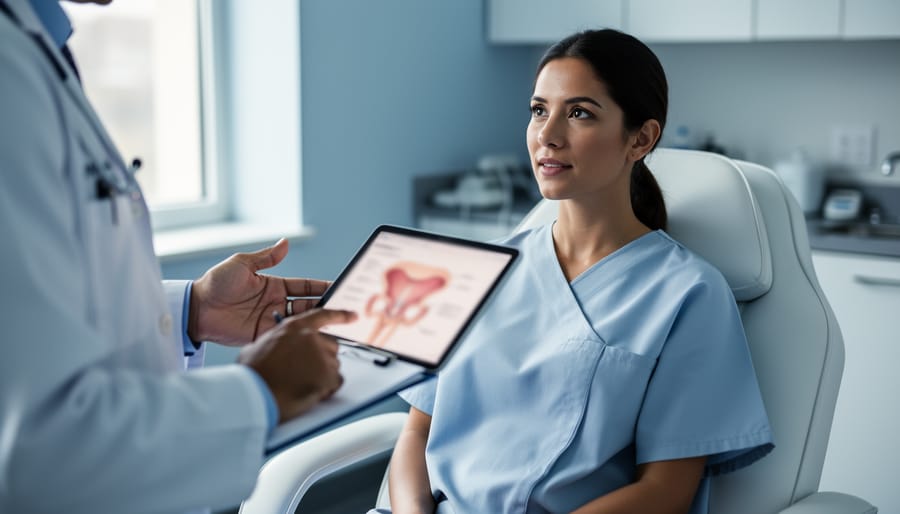
Diagnosing endometriosis involves a combination of patient interviews, physical examination, imaging tests like transvaginal ultrasound or MRI, and in some cases, a surgical procedure called laparoscopy to confirm the presence of endometrial tissue growing outside the uterus. If you’ve been experiencing painful periods, pelvic pain between cycles, or pain during intercourse, you might be wondering what steps your doctor will take to figure out what’s happening in your body.
The journey to an endometriosis diagnosis can feel overwhelming. I’ve spoken with women who waited years before getting answers, often feeling dismissed or told their pain was normal. But here’s what you need to know: your symptoms deserve attention, and understanding the diagnostic process can help you advocate for yourself and know what to expect at your appointments.
Unlike some conditions that show up clearly on a simple blood test, endometriosis requires a thoughtful, multi-step approach. Your doctor will start with your story and a physical exam, then may recommend imaging tests. Transvaginal ultrasound is typically the first-line test, with sensitivity rates between 88% and 93% for detecting certain types of endometriosis. MRI can be particularly helpful for identifying growths affecting the bladder, rectum, or areas outside the pelvis. However, laparoscopy remains the only method that can definitively rule out endometriosis.
Just as you’d seek specialized OB-GYN postpartum advice for recovery after birth, finding a healthcare provider experienced in endometriosis care makes a real difference in getting the right diagnosis and treatment plan for your unique situation.
What Endometriosis Diagnosis Means
When you receive a diagnosis of endometriosis, it means your doctor has confirmed that tissue similar to the lining of your uterus is growing in places it shouldn’t be, like your ovaries, fallopian tubes, or the outer surface of your uterus. This tissue behaves like the lining inside your uterus, thickening and breaking down with your menstrual cycle, but because it has nowhere to go, it can cause inflammation, scarring, and the kind of pain that might have brought you to your doctor in the first place.
Understanding a few key terms can help you feel more confident as you navigate this process:
- Endometriosis
- A condition where tissue similar to your uterine lining grows outside the uterus, causing pain, inflammation, and sometimes fertility challenges.
- Laparoscopy
- A minimally invasive surgical procedure that allows doctors to see inside your abdomen and definitively confirm or rule out endometriosis.
- Imaging
- Non-invasive tests like ultrasound or MRI that help doctors visualize abnormal tissue growth without surgery.
Getting a proper diagnosis matters more than you might realize. It opens the door to treatment options that can genuinely improve your quality of life, whether that means managing pain, protecting your fertility, or simply understanding why you’ve been feeling the way you have. A diagnosis validates what you’ve been experiencing and gives you and your healthcare team a clear starting point for creating a treatment plan tailored to your needs. You’re not imagining your symptoms, and you’re not alone in this journey.
How the Diagnostic Process Works

Your Medical History and Symptom Discussion
Your first appointment is more conversation than examination. Your doctor will sit down with you to build a complete picture of what you’re experiencing, and this matters more than you might think, because your story holds crucial diagnostic clues.
Expect questions about your menstrual cycles: how long they last, how heavy your flow is, whether you experience bleeding between periods. You’ll discuss pain in detail, when it happens, where you feel it, how severe it gets, and whether it interferes with daily life. Many doctors ask about pain during sex, bowel movements, or urination, particularly around your period.
Fertility concerns often come up, especially if you’ve been trying to conceive. Your doctor may also ask about family history, since endometriosis can run in families.
Here’s what you need to hear: your symptoms are real and valid. If you’ve felt dismissed before, or if you’ve wondered whether the pain is “all in your head,” know that endometriosis symptoms deserve proper investigation. Be honest about what you’re experiencing, even if it feels awkward. The more complete your symptom picture, the better your doctor can guide the diagnostic process. Write down your symptoms before the appointment if that helps, there’s no shame in coming prepared with notes.
Physical Examination
During a pelvic exam, your doctor will gently feel your abdomen and perform an internal examination to check for any signs that might suggest endometriosis. This isn’t a diagnostic test on its own, but it helps your doctor understand what’s happening in your body.
Your doctor will feel for tender areas, cysts, or nodules behind your uterus or along the ligaments that support it. Sometimes they can detect scar tissue or areas where organs may have adhered together. You might feel some discomfort if they press on sensitive spots, and that’s actually useful information for them.
It’s completely normal to feel nervous about this exam. Remember, your doctor performs these examinations regularly and wants you to be as comfortable as possible. You can ask questions beforehand, request a chaperone, or let them know if you need a break. Many women find the anticipation worse than the actual exam, which typically takes just a few minutes. Communicating openly about any pain or discomfort helps your doctor gather the information they need while respecting your experience.
Types of Diagnostic Tests for Endometriosis
Transvaginal Ultrasound (TVUS): The First-Line Test
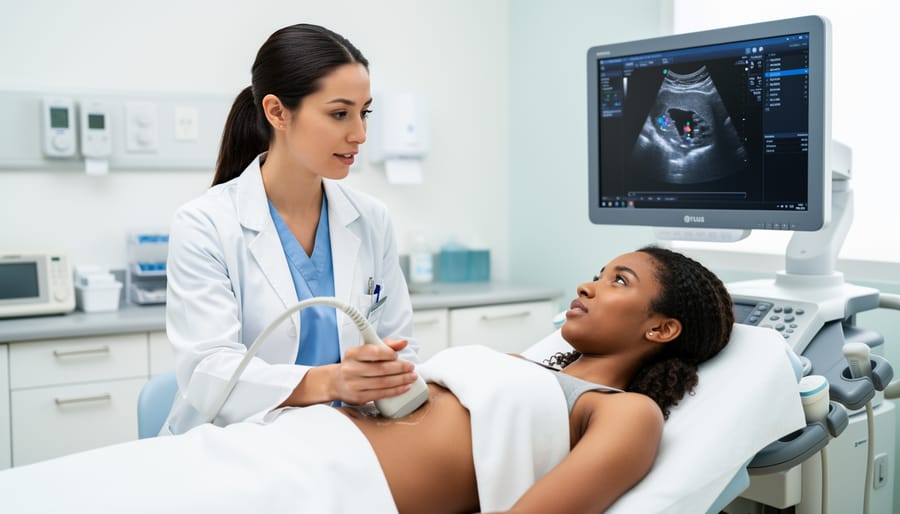
A transvaginal ultrasound is often the first imaging test your doctor will recommend if they suspect endometriosis. It’s a non-invasive scan that uses sound waves to create detailed images of your pelvic organs, helping your doctor spot endometriotic cysts (called endometriomas) and other signs of the condition. This test has become the go-to starting point because it’s widely available, doesn’t involve surgery, and provides valuable information relatively quickly.
The TVUS diagnostic accuracy is impressive, with sensitivity rates of approximately 88% to 93%. That means it catches the vast majority of detectable cases, though it’s worth knowing that it works best for identifying ovarian endometriomas and deeper infiltrating endometriosis rather than superficial lesions.
Here’s what you can expect during the procedure:
- You’ll be asked to empty your bladder beforehand for clearer images
- A slender ultrasound probe, covered with a protective sheath and gel, is gently inserted into the vagina
- The sonographer slowly moves the probe to view different angles of your uterus, ovaries, and surrounding tissues
- The exam typically takes 15 to 30 minutes and may cause mild pressure but shouldn’t be painful
- The images can reveal endometriomas, adhesions, and abnormal tissue growth patterns
Most women find the procedure manageable, especially when they know what to expect. If you feel anxious, let the technician know. They can talk you through each step and work at a pace that feels comfortable for you.
MRI for Complex Cases
When ultrasound doesn’t provide enough information or your doctor suspects endometriosis in less common locations, they may recommend an MRI scan. This imaging technique uses powerful magnets and radio waves to create detailed pictures of your pelvic organs and surrounding tissues.
MRI excels at showing ovarian cysts and growths that affect organs beyond your reproductive system. If endometriosis has spread to your vagina, rectum, or bladder, MRI can help visualize these areas more clearly than ultrasound. It’s particularly valuable for MRI for extra-pelvic disease meaning endometriosis that has grown outside your pelvic cavity entirely, such as on your diaphragm, lungs, or surgical scars.
The scan itself is painless, though you’ll need to lie still inside a tube-shaped machine for about 45 minutes. Some women find the enclosed space and loud knocking sounds challenging, but you can ask about options to make you more comfortable.
One important consideration: accessing specialized endometriosis MRI in Canada can be difficult. Research shows that limited dedicated imaging exists because many radiologists haven’t received training in the specific protocols needed to detect endometriosis effectively. This means wait times may be longer, or you might need a referral to a specialized centre.
Laparoscopy: The Definitive Diagnosis
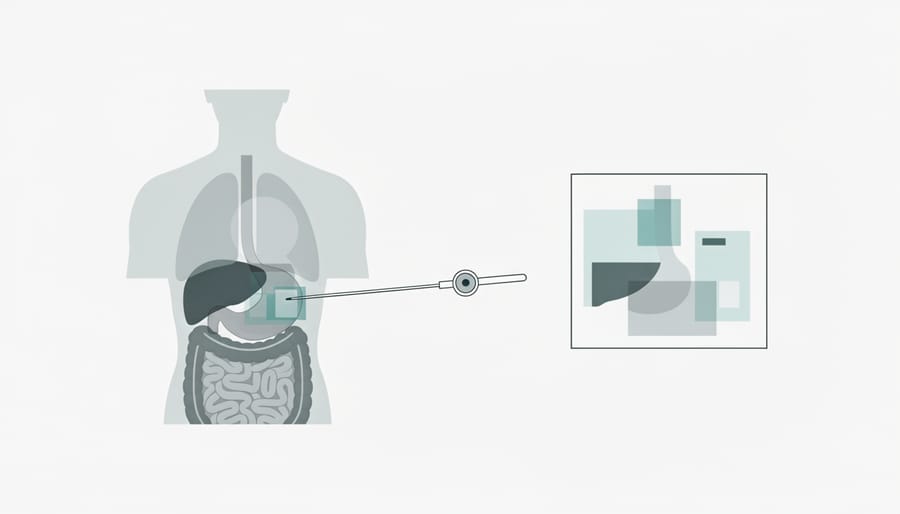
Laparoscopy stands as the gold standard for endometriosis diagnosis because it’s the only method currently capable of definitive ruling out of the condition. While imaging tests give your doctor valuable clues, only laparoscopy allows them to see endometrial-like tissue directly and confirm its presence with certainty.
This minimally invasive surgical procedure involves your surgeon making small incisions in your abdomen and inserting a thin camera to examine your pelvic organs. They can see implants, adhesions, and cysts that other tests might miss. If they find endometriosis during the procedure, they’ll often remove visible tissue right then, which serves both diagnostic and therapeutic purposes.
Your doctor typically recommends laparoscopy when imaging suggests endometriosis but you need confirmation before starting significant treatment, when you’re not responding to initial treatments, or when you’re experiencing severe symptoms affecting fertility or quality of life. It’s not the first step for everyone, many women start with less invasive approaches first.
Recovery usually takes one to two weeks. You’ll have soreness around the incision sites and might feel bloated from the gas used during surgery, but most women manage well with over-the-counter pain relief. You’ll likely go home the same day and can return to light activities within days.
While the thought of surgery feels daunting, many women find relief in finally having concrete answers after years of uncertainty.
When and Why These Tests Are Used
Your doctor’s choice of diagnostic tests depends on several key factors that work together to create your unique diagnostic path.
The severity and type of your symptoms usually guide the first decision. If you’re experiencing mild to moderate pelvic pain or irregular periods, your doctor will typically start with transvaginal ultrasound as the first-line test. It’s non-invasive, accessible, and with its 88-93% sensitivity, it can identify many cases without surgery. When pain is more severe, recurrent, or accompanied by fertility concerns, doctors may move more quickly toward laparoscopy for definitive answers.
Your treatment goals matter significantly in deciding which tests to pursue. If you’re primarily seeking pain management and your symptoms respond well to initial treatments like hormonal therapy, doctors often monitor your progress without surgical diagnosis. However, if you’re trying to conceive or considering surgical treatment options, laparoscopy becomes more important because it provides the clearest picture of what’s happening inside your pelvis.
The suspected location of endometriosis also influences testing choices. Standard pelvic imaging works well for ovarian cysts and common pelvic locations, but if your doctor suspects endometriosis has spread beyond the pelvis or involves the rectum, bladder, or vagina, MRI becomes valuable for mapping the extent of tissue growth before planning treatment.
This explains why some women receive a diagnosis relatively quickly while others wait months or years. Women with classic symptoms visible on ultrasound and straightforward cases often get answers faster. Those with symptoms that mimic other conditions, deep infiltrating endometriosis that’s harder to image, or limited access to experienced radiologists may face longer diagnostic journeys. Your doctor weighs these factors carefully to balance getting answers with avoiding unnecessary invasive procedures.
What About Blood Tests?
If you’re hoping for a simple blood test to diagnose endometriosis, it’s understandable, blood work feels less invasive and more straightforward than imaging or surgery. Unfortunately, there isn’t currently a blood test that can reliably diagnose endometriosis. While researchers have explored various biomarkers, including CA-125 (a protein sometimes elevated in women with endometriosis), these tests aren’t accurate enough for diagnosis. CA-125 levels can be elevated for many reasons unrelated to endometriosis, and they can be normal even when endometriosis is present.
This is why doctors rely on the combination of patient interviews, physical examination, and imaging like transvaginal ultrasound or MRI as their diagnostic approach. When uncertainty remains, laparoscopy provides the definitive answer since it’s the only method that can conclusively rule out endometriosis.
I know it can feel frustrating that there isn’t a simpler option yet. The medical community continues researching more accessible diagnostic tools, but for now, the proven methods remain your best path to answers and appropriate treatment.
Common Questions About Endometriosis Diagnosis
Getting answers about endometriosis can feel overwhelming, especially when you’re navigating symptoms and wondering what comes next. Many women have similar questions about the diagnostic process, and understanding what to expect can make the journey feel less daunting.
How is endometriosis diagnosed?
Endometriosis is diagnosed through a combination of patient interviews about symptoms, physical examination, and imaging tests like transvaginal ultrasound or MRI. Laparoscopy is the only method that can definitively rule out endometriosis.
What is the first test my doctor will order?
Most doctors start with transvaginal ultrasound (TVUS), which is the most widely used non-invasive first-line test. It has a sensitivity of approximately 88% to 93% and can identify many cases without surgery.
Can blood tests diagnose endometriosis?
Currently, no blood test can reliably diagnose endometriosis. While researchers are working on developing blood-based markers, diagnosis relies on imaging and surgical methods.
Should I see a specialist for diagnosis?
If your symptoms are persistent or severe, asking for a referral to a gynecologist who specializes in endometriosis can be helpful. Many radiologists don’t perform dedicated imaging for endometriosis, so a specialist’s network can ensure you receive appropriate testing.
You might also wonder about the timeline for getting diagnosed. While there’s no standard timeframe, the process depends on your symptoms, how quickly you can access imaging, and whether surgery becomes necessary. Some women receive a diagnosis within weeks if ultrasound findings are clear, while others may go through months of testing and specialist consultations before reaching a definitive answer.
If your first ultrasound doesn’t show endometriosis but your symptoms continue, that doesn’t mean you should stop seeking answers. Keep communicating with your doctor about what you’re experiencing. Your symptoms matter, and persistence in advocating for your health often makes the difference between getting help and being dismissed.
Remember, you’re not alone in this process, and asking questions is part of taking charge of your health journey.
Getting answers about endometriosis can feel like a long road, but understanding the diagnostic process puts you in the driver’s seat. You now know what tests to expect, from that first transvaginal ultrasound through to potential laparoscopy, and why each one matters. This knowledge helps you ask the right questions and advocate for the care you deserve.
The 2021 Canadian guidance on collaboration for patient-oriented endometriosis care shows the medical community is listening and improving. Progress is happening, even if diagnosis sometimes takes longer than we’d like.
Remember, your symptoms are real and valid. If you’re experiencing painful periods alongside other changes like peri menopause symptoms or if endometriosis is affecting your daily life enough that you need to plan for long illness speak up. Keep pushing for answers until you find a doctor who takes your concerns seriously.
You are not alone in this journey, and getting the right diagnosis is the first step toward feeling like yourself again.